Showing posts with label Keowee Valley. Show all posts

Wednesday, January 22, 2014

New Review at Book-alicious Mama

disabilityhorizons.com
Woke up this morning to find a new review of Keowee Valley over at Book-alicious Mama, a fantastic--and fantastically thorough, interesting, and smart--book blog written by Jennifer Smeth. I'm a follower, because Jennifer blogs daily about great books, answering all the questions I tend to have when I'm looking for a new read. I'm in awe of the amount of time and effort she spends posting: she truly delves deeply into each book, getting at its unique center. She must have stacks of books waiting to be read!

It really does make me happy to know that people are still reading and enjoying Keowee Valley. To read the review, go here. And if you're looking for new reads, I highly recommend following her blog!

Friday, January 10, 2014

Keowee Valley the Amazon Daily Deal - TODAY only $1.99

Hi, all!

Happiest of Fridays to you all! After 11 days in Vermont in sub-Artic temperatures, 3 plane trips and delayed luggage, I'm finally back home with my family. Happiness!

More on my time at the Vermont College of Fine Arts in the MFA in Writing program soon, but for now:

Keowee Valley is the Daily Deal today at Amazon, only $1.99!

I'd greatly appreciate it if you'd share with your friends and fans of historical adventure, on any social media sites you frequent. I'd love to introduce Quinn and Jack, and the Revolutionary-era Southern frontier, to new readers!

Tuesday, December 31, 2013

Tak' a Cup o' Kindness Yet

On this New Year's Eve, I wanted to thank you all for being so good to me over the past year--for reading my novel, Keowee Valley, and falling in love with its characters--especially Quinn and Jack--and the wild Carolina frontier, for taking the time to visit me here and to correspond with me about so many different topics, not the least of which has included the novel, history, politics, parenthood, football, pursuing a MFA in Writing, and how to make the world's best tomato pie.

Your interest and friendship has been kismet and blessing both, and I hope you'll hang in there with me over the next year as I attempt to conquer the world. Kidding. I mean, as I attempt to parent two wee ones, finish my graduate program, and write the next adventure in Quinn's story.

Today, and as an American Scot, I've got to pan the stage light over to the great Scottish bard Robert (or, as the Scots called him, Rabbie) Burns, who's responsible for the timeless and perfect poem "Old Lang Syne." This poem, of course, has become the anthem of New Year's Eve in American and across the world.

Auld Lang Syne

Should auld acquaintance be forgot
And never brought to mind?
Should auld acquaintance be forgot
And auld lang syne?


Chorus:
For auld lang syne, my jo,
For auld lang syne,
We'll tak a cup o' kindness yet
For auld lang syne.


And surely you'll be your pint-stowp
And surely I'll be mine
And we'll tak a cup o' kindness yet
For auld lang syne!


Chorus

We twa hae ran about the braes
And pu'd the gowans fine
But we've wander'd monie a weary fit
Sin' auld lang syne.


Chorus

We twa hae paidl'd in the burn
Frae morning sun til dine,
But seas between us braid hae roar'd
Sin' auld lang syne.


Chorus

And there's a hand, my trusty fiere,
And gie's a hand o' thine,
And we'll tak a right guid-willie waught
For auld lang syne!


Chorus
BBC News Scotland
BBC News Scotland

Burns was a hugely popular poet in his day (the late 1700s); he was also a lyricist and an exciseman, which meant he was in charge of checking on and reporting import items to Scottish ports. And wasn't he a good-looking fellow, too? Like so many of his fellow 18th century poets, he died young. He was 37. But Burns is credited with sharing the Scottish dialect and language with the world. "Old Lang Syne" is said to be a Scottish folk song that he adapted.
 
 BBC News Scotland posted a fantastic article yesterday, about Burns, the song, and how it all came to be.

Burns once wrote:

"My way is: I consider the poetic sentiment, correspondent to my idea of the musical expression, then chuse my theme, begin one stanza, when that is composed—which is generally the most difficult part of the business—I walk out, sit down now and then, look out for objects in nature around me that are in unison or harmony with the cogitations of my fancy and workings of my bosom, humming every now and then the air with the verses I have framed. when I feel my Muse beginning to jade, I retire to the solitary fireside of my study, and there commit my effusions to paper, swinging, at intervals, on the hind-legs of my elbow chair, by way of calling forth my own critical strictures, as my, pen goes."

And a better way of describing a writer's creative process, I've not seen.

I hope that tonight you're all able to give thanks for the "good old days," to meet with dear friends, and to take a cup of kindness for the coming year!

Friday, November 15, 2013

Show & Tell Friday: the Middle School, Nature, and History Edition

Hello to all on this crisp, cold (at least where I am) Friday in November. Hope everyone is having a wonderful Fall so far.

I sort of semi-extended my Internet fast into the week, and haven't spent nearly as much time as usual online. It's been .... wonderful. Really, really nice. In that vein, I don't have much to share! We found out over the weekend that my 6 month-old is allergic to Amoxicillin, a fairly common allergy in infants but still scary to us at first. Took a little while for us to adjust ... and to not want to sleep on a camp pad beside her crib every night to make sure she was still breathing. But all is well.

So just a couple of quick things to share:

1. The Awkward Years Project

There's a little one-page article in the December issue of O Magazine called "The Dork Ages," and it's about a woman named Merilee Allred, who started a site on Tumblr called "The Awkward Years Project." In it, people post photos of themselves, now, holding a photo of themselves at their most awkward. Allred says, "I want people to relive their past and be proud of who they are now" (O Magazine, 36). The article struck me because A) It's a neat concept--and especially good for young people, who are at times paralyzed by how they appear to the world--to consider, and embrace: this is who I was, who I am; B) Allred is curiously close to my age, so her "awkward" portrait looked oh so familiar; and C) I love the title. Those years--especially the middle school ones--truly are the dark ages. As in no light. As in horrifying.

Think I'm exaggerating? Ask a 13 year-old.

Anyway, I may just post a photo of my own. I can see it now: In it, I'm about 12 or 13 years old--definitely in the 7th grade, which was probably the most glorious year of my life. Ha. I'm wearing a color-blocked knit dress (funny how color block is now back in style?) black hose (yes, hose--as in nylons), ginormous patent leather black dress shoes (long feet are a blessing from my mother, whose father once told her she could waterski in her church shoes), and I've got one of those early '90s haircuts. You remember them: the almost-grown-out perm. The puff bangs: one section curled down and one curled up? I think this was the last time I used an actual curling iron. My features are too big for my face: giant, lipsticked lips on my great big smile, a huge nose, big eyes and bright, shiny metal braces.

This was the year in which several 8th grade girls bullied me--back then I'd have called it "ganged up on," but now I know better--daily, consistently, for the entire year; my up to that point solid little group of girlfriends dropped me like a hot rock, and I basically had one girlfriend who stood by me, and lots of guy friends who didn't know the difference. God bless them!

It was an ugly, ugly year. But I got through it, and that, I think, is Allred's point. And I must say, I'm proud I still grinned big, even with the brace face. (P.S. I don't really blame those girls. It was a long time ago. And 7th grade is like a long, hard, hormonal war from which no one escapes unscathed.)

I'd post the photo here, but it's currently molding in the basement of my parents' house in South Carolina. I swear.

Check out the Awkward Years Project here. Think about posting a picture of yourself!

2.) Currently on my bedside table, to read:

supernaturalhome

Super Natural Home: Improve Your Health, Home, and Planet--One Room at a Time by Beth Greer

Sent to me by a dear friend, this book is by the same woman from the brand SuperNaturalMom. She's a journalist, holistic health advocate, and runs the SuperNaturalHome web site, which is "devoted to providing healthy, natural strategies and advice." Deepak Chopra says that it's "... an invaluable book, filled with practical solutions on how to eat healthier, breathe cleaner air, and transform your home into a safe haven, free from toxic chemicals."


oconeecountyImages of America: Oconee County by Piper Peters Aheron

I meet Piper Peters Aheron at the 2013 Birchwood Book and Author Fair at Table Rock State Park in South Carolina, where we quickly realized we shared a deep interest in and abiding love of the South Carolina Upcountry--and that we'd perused several of the same research sources when writing our books about the area. Since then, we've become Twitter buddies, which is a blast--one of the very neat perks of having writer-friends.


darkandbloodygroundDark and Bloody Ground: The American Revolution Along the Southern Frontier by Richard D. Blackmon

Yep. I'm a history dork. I studied the American Revolution in the South, and along the Southern frontier (i.e. in the foothills and mountains of the South) for two years when researching Keowee Valley. Now that I'm diving into its sequel--a dreadfully slow process--I'm looking for great new books. This one popped up on a Google search, where one reviewer called it "... a solid overview of the entire frontier war for the South in one volume, placed deftly in the context of the larger war as a whole" (Past in the Present). Exactly what I was looking for.
 
 
and the September-October issue of South Carolina Wildlife magazine (I'm a little
sc wildlifebehind)

I love this magazine, from the SC Department of Natural Resources; subscribed to it as a kid all the way up until a few years after we moved to North Carolina. Either my Crawford grandparents, aunt, or one of my uncles had originally given it to me as a Christmas present, long ago. Recently, it arrived in the mail: my uncle had decided to gift it once again--a lovely surprise. I can't wait to dig in. A must for any South Carolinian interested in learning more about the natural treasures of home.

FYI: They're running a special right now: you can give the magazine as a gift for only $12 per year.

Happy weekend to all! Stay warm!

Tuesday, October 29, 2013

New Interview at Appalachian History

Hi, all.

I’m truly excited to share this interview with me over at Appalachianhistory.net, a fantastic web site for all you history and mountain-lovers. I’d not known about the site until I received an interview request from one of its contributers, and I immediately popped on over to check it out.

Three hours later, I was hooked. The site says that it’s filled with “stories, quotes and anecdotes from Appalachia, with an emphasis on the Depression era.” This is absolutely true, but there’s so much more to see there. It’s a fabulous resource for anyone researching the Appalachian region–and the stories (which include some of the coolest old photographs) that I’ve read there make my writer’s brain twitch … I can see all sorts of characters emerging from real life.

I hope you’ll check out the interview. It was conducted over several weeks via email, as Joshua Salmans, the interviewer, is living in Brazil with his wife. He asked some evocative questions, about Keowee Valley colonial South Carolina, gender roles in the Revolutionary-era, sexuality in fiction, the Cherokee, my personal background, and more. I had a great time answering them!

Wednesday, October 23, 2013

Photos from the Cataloochee Valley, North Carolina

Happy Hump Day, everyone!

It finally feels like Fall here in Western North Carolina. We woke up to 38 degrees this morning, which isn’t so unusual at all this time of year in the mountains, but hadn’t happened yet. If you’re planning to travel to see the leaves, especially on the Blue Ridge Parkway, this is definitely the time to do it.

Last week I posted about getting ready to head to the Cataloochee Valley of North Carolina to see the elk. Well, we went, we saw, and we had an incredible time. There were six of us: two of my best friends, one with her 2 year-old son, and me and my girls (ages 4 years-old and 5 1/2 months). We met in Waynesville, NC, which is about midway between all our towns and the Cataloochee Valley, regrouped, and caravanned into the Great Smoky Mountains National Park. We’d waited for two weeks for the government to reopen so we could go, so we were psyched to be there among the gold, red, and orange trees, the other visitors, and of course the elk.

Driving through the Valley this time of year is a little like driving through a less-crowded

picnic funversion of Yellowstone.

People stop their cars, hop out to take pictures, and get much closer to the wildlife than they should. This year there were signs near the road warning cars to stay out of the fields. You’d be surprised–or maybe you wouldn’t–at what some folks will do around wildlife.

Cough. Including us. We unfurled our picnic blankets in the middle of a meadow where a turn of the century (the 20th century) church sat, pulled out our PBJs, yogurts, Goldfish and hot chocolate (can you tell we were with kids?), and thoroughly enjoyed ourselves. My 4 year-old and my friend’s 2 year-old ran around squealing like little happy banshees. (Yes, I know banshees are NOT happy. But that’s what they sounded like.)

During all this, my friends and I–all of whom have been outdoor educators and worked in the field–kept wondering aloud if it was really smart to picnic in the middle of the meadow during rutting season. But then we shrugged, since we’d done it before. About that time an enormous young male elk wandered across the creek from another meadow near by and walked right past our blankets. We gathered the kiddos close and stayed still. A park ranger with a big ol’ stun gun slung over his shoulder wandered our way and chatted with us while we watched it walk by.

Yep, we were THOSE people. We felt like idiots. But boy was it fun to see the elk up close!

looking at elk

The ranger told us that though the elk are doing fairly well, they’ve had a few die lately due to various causes, including being hit by a car, caught and tangled in underbrush, and shot by idiots. I mean people. One man apparently drove into the Cataloochee Valley, walked right up and shot one of the elk.

Eventually, of course, there’s hope that the elk will do so well that there’ll be a hunting season for them, especially since their ancient natural predators–mainly wolves and panthers–no longer roam the Southern Appalachians. But that’s a long time coming.

At the end of the evening, when the sun had set below the ridges and the clouded sky grew dark, we loaded up our cars and headed out of the Valley. One friend (sans kids) decided to camp. The other and I had to get our children home to bed. It was a 10-mile drive down a pitch dirt road to reach highway again. We all agreed we’d do it again in a heartbeat.

leaving the Valley

Tuesday, October 1, 2013

Wondering What to Do During the Goverment Shutdown?

Today, hundreds of National Parks across our great land are closed due to the partial government shut-down. This makes me sad, and makes me grind my teeth in frustration for so many reasons. Most of all, my heart goes out to all the bright and faithful Park Service employees who live their lives helping to maintain and preserve what is truly “America’s best idea,” and to the thousands of families who’d planned vacations in the Park system this Fall.

I’m lucky to have spent a lifetime outside, and in the Park system–although there are quite literally hundreds of Parks I’ve not visited yet and would still love to see. When I researched Keowee Valley, imagining and tracking the routes that Quinn and Jack would take across the wild Appalachian backcountry, I spent quite a bit of time in National Parks and National Forests. I hiked, camped, swam, paddled, horseback rode and simply just sat in the splendor that is our national natural heritage. I wouldn’t be who I am, and Keowee Valley certainly wouldn’t be what it is, without that exposure and those experiences.

ecobookclub.wordpress.com

The air has cooled, the leaves will soon be afire with Autumn, the fog hangs low on the hills and hovers spirit-like over the river bottoms in the dawn, and the sky is crystalline blue during the day. It’s the perfect time to get outside.

But since you can’t get into the National Parks right now–or at least until the government (and I mean ALL of us) wake up and smell John Muir’s and Teddy Roosevelt’s coffee–I suggest you check out probably the coolest documentary I’ve ever seen: “The National Parks: America’s Best Idea” on PBS, by award-winning filmmaker Ken Burns.

You’ll be forever changed. You’ll want to steal someone’s station wagon and take to the open road. I promise.

Monday, September 30, 2013

Books for Your Reading List

Saturday night I had the pleasure of hearing Ann Hite and Karen Spears Zacharias read from and talk about their new novels at wonderful Malaprop's Bookstore & Café in Asheville, North Carolina. Ann--whom I met at a literary festival last year and who has become a lovely writer-friend--and Karen have been traveling all over the South lately on a book tour. They've spent time recently at several places I traveled on my own book tour for Keowee Valley, last Fall, so it was fun to compare notes.
Ann Hite reading from The Storycatcher at Malaprop's Bookstore ~ Asheville, NC
 
It was wonderful to get to see Ann, especially. She's one of those people who emanates warmth, she's funny, and she's got this creative spark you can literally see shine in her eyes. Her newest novel, The Storycatcher, takes place in two gorgeous places: Black Mountain, North Carolina, and the sea islands of Georgia. This is definitely one to put on your Fall/Winter reading list!

Asheville--crazy, wonderfully nutty Asheville--was a wild scene on Saturday night. I'd tried to convince friends to come with me to the reading, but most were doing the single-parent thing that night with spouses out of town. Others had run in Asheville's half-marathon that morning, and were just plumb tired. So I went alone, and ended up having to park in a parking garage because of an Icelandic punk rock band playing at the Asheville Civic Center that night. No kidding: there was a line of hipster-punk rockers stretched five people deep around the block. I know because I circled the Civic Center three times looking for a space.
Asheville, NC
Asheville, NC
 
I always roll down my windows when I drive through downtown Asheville. I don't want to miss the drum circle, the singing, the catcalls. People watching here is PRIME. On my way in Saturday night I passed a gospel choir standing out on a side street belting it out for all they were worth, several street performers and their dogs, folk singers at the drum circle, and more than a few Town and Country types wearing skinny jeans and knee-high leather boots that cost more than my car. Followed by an inordinate amount of white people in full dreadlocks.

I love Asheville! It's hard not to love a city on a big river in the Blue Ridge, where all are unabashedly welcome.

Anyway. It was a great night, Ann and Karen were wonderful, and I'm excited to have new books to read. Ann also introduced me to Amy Allen, author of Summoning the Mountains, her unique story of hiking the Appalachian Trail as a divorced, single mother of two teenaged boys. Another for the reading list.

Happy sunny Monday to you all!

Wednesday, September 25, 2013

New Authors & Books in the Mountains: Recap of the Carolina Mountains Literary Festival

Last weekend I had the privilege of attending the 2013 Carolina Mountains Literary Festival in Burnsville, North Carolina, as an author presenter.

I took with me a tube of mascara that hadn’t been opened in six months, the only clothes (read big ol’ sundresses) that fit my current post-baby body, my camera, a couple of fashion magazines (this is funny, really, if you knew me), a notebook and pens, and one of my best friends in the world. I did not take my husband, the 4 year-old, the baby or the dog.

In all honesty, I didn’t know what to expect. I’d heard about this festival–lauded in the region and in the NC literary community–for years, and had always longed to take part. When Wayne Caldwell, a NC author (Cataloochee, Requiem by Fire) who’d read an Advance Review Copy of my novel, Keowee Valley, just before it was published mentioned that he thought I’d be a great fit, it made me want to go all the more. I knew that it was a festival for writers AND readers, that Burnsville was supposedly a beautiful place, and that past authors included some pretty wonderful writers: Ron Rash, Sarah Addison Allen, Fred Chappell, Kathryn Stripling Byer, Robert Morgan and more. I also knew that this year’s Keynote Speaker was Elizabeth Kostova, author of The Historian, one of my new favorite works of historical fiction.

Heading towards Burnsville, North Carolina

So, I kissed the babies, the husband and the dog, and headed northwest into the deeper NC mountains. Being a writer-mom on a budget, I only sprang for one night at Ms. Ruth’s Colonial Guest Rooms (more on this later), so I sped away from Brevard after dropping my daughter off at preschool Friday morning.

It was a gorgeous drive, mountain and September-lovely. I popped a little Suzy Boggus in the CD player–

Give me some wheels
put me on the highway, won’t look back

–and rolled down the windows, singing at the top of my lungs. My youngest aunt introduced me to Boggus’s music years ago, when I spent the summer with her in Alaska rolling down glacial highways (another story). I’d loved it since.

Here's Suzy singin':


I met my buddy at the Conference parking lot (she, too, sans baby, husband and dog). We ran across the gravel to hug each other; it had been way, way too long. After visiting Author Check-In we wandered over to where Asheville, NC’s Malaprop’s Bookstore had set up shop. Shameless, I meandered down the table, looking for my novel. Just as I found it, a woman smiled at me, said, “Excuse me, I need this book,” and reached past to grab it from the stack.

My friend, of course, jabbed me with her elbow. I cleared my throat.

“I wrote that book,” I said, unable to hide my grin.

“You did!” The woman enthused. “I’ve been looking for you!”

Burnsville, NC ~ Carolina Mountains Literary Festival

Thus was the beginning of a truly fabulous two days and one night in the Norman Rockwell-esque town of Burnsville, at probably the most enjoyable literary festival of which I’ve ever been part. There were some great moments, and I’ll list more than a few because this is my blog and I can:
  • Staying up late, talking non-stop with my friend in our cozy little room at the Colonial Guest Rooms, a beautiful old Victorian farmhouse/guesthouse run by the spry and lovely Ms. Ruth. It had two beds, a porch, a bathroom with a claw-foot tub, a mini-fridge, a flat-screen TV, and was just a skip from downtown Burnsville.
  • Calling my friend, Erin, “Eric” all weekend. The organizers had given her a “guest of the author” nametag with the wrong name on it, assuming, I suppose, that I’d be bringing a date with me. It was pretty darn fun watching people bend down and squint at her nametag. I think I’ll continue to call her “Eric” for the rest of the year. Maybe into 2014. She’ll love it.
  •  Meeting and getting to spend time with other authors, like the amazing Elizabeth Kostova–who offered some encouraging words about getting through the early-childhood years as a writer-mama–the fabulous Charles F. Price and his equally fabulous wife, Warren Wilson College’s Mallory McDuff, Fred Bahnson, from my adopted hometown of Brevard, and many more.
  •  Spending time and presenting at the absolutely delightful book and antique store, Off the Beaten Path, where I was made to feel so much at home. They set me up with a cup of hot tea at a big, gorgeous wooden table tucked between the stacks. I’m proud to say that the fine ladies of Off the Beaten Path had to search for folding chairs for my presentation audience, and that at one it was standing room only. Such fun!
  • Meeting readers and other festival-goers. Because the festival was so user-friendly, I had the pleasure of spending true quality time with new writer-friends, hanging out in the author lounge–one of the prettiest little courtyard gardens this side of Charleston, SC–eating lunch beneath the vine-filled trellis at Garden Deli, sitting on a bench in the sunshine on the town square and sharing chocolates from the local Amish bakery with other festival-goers, and so much more.
  • Listening to gorgeous poet and playwright Britt Kaufmann introduce the lovely and wry Elizabeth Kostova so poetically and originally. And then getting to sit at a delicious meal as Kostova told us stories. A joy!
The old Yancey County Library ~ Burnsville, NC

Literary festivals always have their own personalities, and some are more “literary” or more
the town square ~ Burnsville, NC
academic, even more of
a place to “sell yourself” as an author, than others. Nothing wrong with this! But the best thing about the CMLitFest is that it’s truly a festival for everyone–writers, readers, book lovers, history lovers, mountain lovers of all ages. It’s informal, warm, and just a little bit magical, the way that it all comes together. Kudos to the founders and organizers for continuing to craft a venue for the arts that truly represents the unique spirit and literary heritage of the NC mountains.

* On a side note, there’s always a chance in this age of arts-cutting that the Carolina Mountains Festival won’t receive its grants to fund next year’s festival. Please be sure to let your state legislators and representatives know that you want it to keep going–that you value the arts in NC. And please consider attending next year!

I feel lucky to have been part of it, and I hope they invite me back next year!

Thursday, September 12, 2013

Photos from Book Events & Other News

Hi, all. Happy Thursday.

During football season, which always makes me think of being back in college as an undergrad, I can’t help but remember that Thursdays were huge social nights on campus. Everyone went out on Thursday nights. In fact, I can remember getting ready with my roommates to head into Clemson’s little downtown or to one of the many parties across town, and leaving the house at 10 p.m.

I could still do it.

Ha. Bah ha. Ha ha ha!

Okay, that’s over.

Just wanted to share a new web site page of photos I’ve posted from the many Keowee Valley events I’ve attended since the novel was published in September 2012. There are definitely some I’ve missed, so if you happened to attend a reading, book signing, book talk, book club meeting, history lecture, party, literary festival, writer’s conference or anything else with me, I’d love to see them. You can email them to me at thewritingscott@gmail.com. Do let me know if they’re okay for me to post.

And let’s all remember, as we peruse these photos, that I was pregnant. In fact, I grew increasingly MORE pregnant as the year went on. Thank you.

* * *

In other news, I’m packing my bags and readying myself for the fabulous Carolina Mountains Literary Festival in Burnsville, N.C., tomorrow through Saturday. Because of this, there’ll be no “Show & Tell Friday” post this week. I’ll try to pick back up next week.

Some time this month I plan to celebrate Keowee Valley’s one year birthday. Not sure how. Now sure when. Not sure what. But it’ll happen, so be on the lookout.

Tuesday, September 10, 2013

Book Clubs & Literary Festivals: How Sweet it is!


I've said it before, and I'll say it again: I LOVE book clubs!

Book clubs have the coolest members, the yummiest food, the neatest meeting spots--be it in someone's cozy home or at the "lake house" at Straus Park in Brevard, NC, where I went yesterday--and their readers ask the most interesting questions. Book club folks love books, and are eager for story. And I love that.
 
At yesterday's meeting with the Straus Park Book Club in my adopted hometown of
strausparkfisherrealty.com
Brevard, NC, we dug into my historical novel,
Keowee Valley. Like its feminine, nuanced cover--'cause what woman isn't nuanced?--the book is weightier, more multi-faceted than you'd think. And these readers were interested in all of it: the history, the adventure, the romance, the publishing process, my writing process, and more. Most of all, it was such a joy to be in my town, to meet fellow Brevardians I'll probably get to see again, and to reacquaint myself with others I'd met before.

Talking with book clubs folks--with any reader of my novel, really--is like a kick in the pants to get writing. A boost of inspiration and gratitude always follows. Now, of course, it's up to me to figure out just how to do that in my crazy, busy, small-child-filled life.

* * *

2013 Carolina Mountains Literary Festival ~ "Take Me There" ~ September 12 - 14

At the end of this week I'll head up into the higher mountains to Burnsville, NC, to participate in the Carolina Mountains Literary Festival. This year's theme is "Take Me There," and the festival showcases "authors and works that transport us."

This is a fabulous gathering for writers, READERS, history and mountain lovers, artists and more. And it's in a gorgeous spot: Burnsville sits right at the entrance to Mt. Mitchell, the tallest mountain in the Appalachians and in the eastern U.S.  The festival will feature (along with little ol' me) a host of authors, including Elizabeth Kostova, Katherine Soniat, Susan Woodring, Fred Bahnson, Keith Flynn, Abigail DeWitt, and so many more.

There'll be "sessions" (basically a mix of lecture, Q & A, readings, etc), informal gatherings, readings and more all around town at different locations, in cafes, bookstores, art galleries, antique shops and more. I've never been to Burnsville before, but I can't wait to get there.

ashevilleguidebook.com

Actually, I'm leaving my babies, husband and dog behind to have some grown up girls' time with one of my best friends. (Did you hear that? It's me, woohoo-ing like a Nascar fan at the Indy 500.)

I'm giving two sessions at a bookstore called Off the Beaten Path. Details:

Friday, Sept. 13

2-2:45 Off The Beaten Path KATHERINE SCOTT CRAWFORD Informal Lecture, Reading and Q & A - The Slanted Truth: When Fiction Meets History  The rich history of a place makes great fodder for fiction. But are there ethics to follow when it comes to writing historical fiction?
 
Saturday, Sept. 14
 
2-2:45 Off The Beaten Path KATHERINE SCOTT CRAWFORD Brief Lecture, Reading and Q & A – Walking the Story  A writer’s adventure through the Southern Appalachian back country, and the historical novel it inspired. How a novel was birthed by a lifetime outdoors.
 
For more information about the festival, including other sessions and events, click here.


Monday, August 26, 2013

For the History Lovers & Fans of Historical Fiction

Or, for you history dorks like me ...

First, here's a new, FREE online course offered by coursera and Bruce Holsinger, an author and professor at the University of Virginia. It's called "Plagues, Witches and War: The Worlds of Historical Fiction," and it features several wonderful historical novelists and their work, including two of my favorites: Pulitzer Prize-winner Geraldine Brooks (People of the Book, March, etc), and bestselling author Katherine Howe (The Physick Book of Deliverance Dane, the House of Velvet and Glass, etc). These novelists will be virtually "visiting" the class.

I have no free time, of course, but this is too good to pass up. My critical thesis for my MFA in Writing program, which I completed last semester (loooong sigh of relief) was a study of the importance of place in historical fiction; in it, I utilized Brooks and her work. I am a big fan. And Howe's The Physick Book ... is a great favorite, too. I reread it over the Spring, and I swear it just keeps getting better.

For more info about the course, click here.

1760 map of the Cherokee country
Second, if you live in the Western North Carolina or Upper South Carolina area (or, heck, North Georgia, too), and you're interested in the Cherokee Indians, I'm teaching a course at Brevard College this Fall that's right up your alley. Called "Cherokee History in the South: the Colonial Period to the Revolution," it explores the fascinating history and culture of the mysterious and once-powerful Cherokee Indians along the Appalachian frontier. Classes will be held once a week for 5 weeks at Brevard College; they're offered through BC's Creekside continuing education programs.

I based the course on the bevy of research I conducted for Keowee Valley, a novel one reviewer called "an exquisitely crafted love letter to a land and culture swallowed up by an encroaching civilization and inescapable change."

Sorry, that was totally a plug for my novel. I couldn't help myself.

For more information, click here.

Saturday, August 24, 2013

Show & Tell Saturday: A Girl on a Horse, Books, & a Must-See Museum

Please forgive me for the belated Show & Tell post. This past week, my husband lit out for the Mexican border and left me with a rain-addled 4 year-old and a teething 3 month-old.
Just kidding. He had to work out of town. But still.

Not much got done while he was away, except for taking care of the kiddos. And letting my 85 lb black lab sleep on my bed at night. I did take one shower at 1:30 a.m. So that's something.

Anyway ....

Here are some great things to share:

1.) The Storied South by William Ferris
I can't wait to get my hands on this book. Filled with interviews with writers and artists like Eudora Welty, Alice Walker, Pete Seeger, C. Vann Woodward and more, reviewers say that it shows how the power of storytelling has impacted the cultural identity of the South, and all of us.


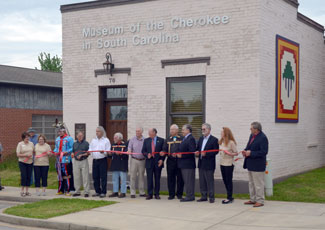
 2.) Museum of the Cherokee in South Carolina
I've not been to the Museum of the Cherokee in South Carolina, but you better believe I'm going to get there as soon as possible. Located across from the courthouse in the cool little town of Walhalla, SC, it only recently opened. The museum is dedicated to preserving and sharing the often little-known history of the Cherokee Indians in the blue hills of South Carolina, where they lived for thousands of years before white encroachment.

This thrills me, because my novel, Keowee Valley, is set largely in this area, and deals with a time period (the mid 1700s) when the Cherokee in South Carolina were still many and powerful. So much of the South has been informed by this incredible nation of people. There's an abundance of history and mystery in those gorgeous foothills; I'm happy the South Carolina Cherokee are finally being celebrated.

Check out the Museum's web site and Facebook page (which posts history tidbits weekly).

3.) A girl and her horse

This is the most incredible thing I've seen in a long time. Shared with me by one of my dearest friends, it's the video of Stacy Westfall, a deaf-mute young equestrienne riding a horse in honor of her father, who recently passed away. She directs the horse via free rein, in the old Native way, using only pressure from her own body.

Seriously, y'all. I sat there and bawled as I watched this. It's an incredible testament to the power of the human spirit--and for that matter, to the power of the animal spirit, too!

Make sure you watch it all the way through until the end, because it just keeps getting better. Trust me: you will be deeply moved.


Wednesday, August 21, 2013

Artist-in-Residency Part II + Tips for Getting the Most Out of Your Artist's Residency or Retreat Experience

* Continued from last week's post about my stint as the Artist-in-Residence at The Reserve at Lake Keowee in Sunset, S.C.

As promised, here's a bit more about my time at The Reserve, where I stayed for a week with my entire family (minus the dog). Last week I mentioned the talks I gave and the fun we had as a family--and even the actual writing of pages (the few, the proud) I was able to complete. This week I'll finish up my recap and offer some tips from my own experiences about how to best utilize an artist's residency like this one.
 
As mentioned, The Reserve is a private community on Lake Keowee, nestled in the foothills of the South Carolina Blue Ridge mountains. The entire Keowee River Valley was flooded in the 1960s to make the lake; the very land on which my novel, Keowee Valley, is set--especially the real-life settings of the Cherokee village of Keowee Town and the British Fort Prince George, lie beneath those blue waters. Or what's left of them after a couple hundred-plus years, a hurried excavation, time and the sheer tonnage of water and pull of gravity.
 
For a moving, gorgeous and powerful first-person account of the excavation and flooding of the Keowee River Valley, see "History's Mornings" in LOST magazine, by the award-winning author, poet and composer Philip Lee Williams.


The Valley is steeped in history, obviously. I was delighted to get to explore two 19th century graveyards on the property. Kathryn Gravely, Director of the Community Foundation, happily took me to each. She and some members of the community have painstakingly cared for these resting places, gently clearing away debris, but being sure not to disturb the graves themselves.

I love old graveyards, like most history nuts. They've never scared me; even as a child, wandering through spooky Lowcountry cemeteries draped in gray, ghostly Spanish moss, I always felt comfortable. There just seemed to be so many stories, so many lifetimes there.


Giving my talk at Orchard House
On our last night at The Reserve I gave a history talk at Orchard House, a lovely and well-appointed room with hefty leather chairs and a huge stone fireplace, located in the Clubhouse. There was a nice crowd, and they asked the most interesting questions. Though I'm certainly no expert, especially when it comes to the Cherokee, I did spend nearly two years--and time since--immersed in research of the period, the people, and the languages and cultures of the place. I'm not afraid to admit when I don't know something.


All in all, it was an amazingly peaceful and productive week--even with my entire family in
Standing outside the Clubhouse

tow! (And that's saying an awful lot.) I'm incredibly thankful to the amazing Kathryn Coleman Gravely,
The Community Foundation, and the wonderful people of The Reserve for their generosity. It's impressive to see a community like this one--one that has formed its own collective identity with purpose and grace--place such a high value on the arts, and on nourishing artists. What a gift!

Dessert at the Clubhouse on our last night


So, if you're an artist or a writer like me, and you get the chance to take part in an artist's residency, here are some tips I've found helpful:

1.) Get to know the people in the community where you're residing.

Even if you've got to bury your head in your work, take the time to venture out and meet the people who live in the town, who run the residency, or who live and work nearby. They're part of the makeup of the place, and their stories are priceless. They're happy you're there--and that happiness will carry over into your own work, lighting it from beneath.

2.) Be flexible and full of good humor.

You never know what can happen over the course of an artist's residency. Some residencies last days, some weeks, and some even months. When I was at the Montana Artists' Refuge for a month, the refrigerator in my apartment made a horrible rumbling noise and then groaned as if it was dying every night. At the Vermont Studio Center, where I spent another month, the house I stayed in was haunted. There were heavy footsteps outside my door for several nights in a row. No lie. And at The Reserve, we ended up having to leave a day early because of a scheduling mix-up. The point is, none of these things mattered. They were tiny blips in the grand scheme of what I hope (and pray) will be a long career as a writer. What I gleaned from each residency far out-weighed anything so insignificant as a bump in the road.

3.) Get out and explore.

No matter where you're residing, get out and explore the natural and man-made worlds around you. It can only inform your art, make it richer, more vibrant and true. In Montana, I met another writer who I discovered was also an avid hiker. We hiked in every state and national forest within a three hour's drive of the Refuge. In October. Sometimes in feet and feet of snow. Did I write as much as I could have? Probably not. But I'll never forget those hikes, the talks, the snow-capped Rockies and endless big sky. Trust me: you will feed off these first-hand experiences for months and even years afterward.

4.) Know all the particulars of your residency beforehand.

When are you supposed to arrive? Depart? Is someone picking you up and dropping you off at the airport/bus station/train station? Should you get a taxi? Do taxis even come out to where you're staying? Do you need to bring linens? Is there a washer/dryer? What about food? Do you need to buy groceries or is there a dining hall? Will you need a rental car, or can you walk just about everywhere? What are your responsibilities while you're in residence: do you need to attend readings, give readings, mingle with townsfolk, other residents, etc? And my Numero Uno: is there a coffee maker and does it work?

5.) Suck the very marrow out of your time there.

Use every moment you have, in some way, to inform your art. Read, write, meditate, listen to music, and do it all over again until you are entirely present in the moment. Get up early. Stay up late. Take naps. You have left your world behind: a world that most likely includes work, friends, family, and a myriad of responsibilities that sometimes weigh heavily. Let them go, as much as is humanly possible. They will be there waiting for you when you return. But you will never get this uninterrupted creative time again. Use it, embrace it, luxuriate in it. Sound your barbaric yawp across whatever rooftop you can find.

6.) Be grateful.

Always be truly thankful for this precious time you've been given. Thank the people in charge, like the residency directors, and the people who aren't--like the maids who clean your cabin/apartment/studio space, or the cooks at the dining hall. Write thank you notes. Write letters to the board of the foundation that paid for you to be there. Thank them for choosing you, for taking a chance on you and your art, for shining a light on artists and creativity in a world that too often seems dim.

If you haven't been lucky enough to enjoy an artist's residency, take heart. There are plenty out there, and one will be perfect for you. Keep writing, creating, and applying.